Acrom Reviews: What Real Customers Say About This Nilotica Shea Butter
Across hundreds of customer reviews and skincare community threads, Acrom’s Pure Nilotica shea butter consistently lands as a yes. The $35 price tag is higher than what most shea butter products run, but the people who actually use it tend to think the Nilotica earns the difference within the first few applications. The questions below are the ones that come up most often before buyers commit, with the answers most customers land on after a few weeks of use.
Is Acrom actually authentic Nilotica, or is that just a marketing label?
Nilotica is a different ingredient from the West African shea you’ll find in most jars on the shelf. It comes from a different subspecies of shea tree, one that only grows in the Nile basin regions of Uganda and South Sudan. The fruit is harvested by hand from wild trees and processed by women in small cooperatives. By the time it reaches a jar, it has a noticeably softer feel and a paler color than its West African counterpart.
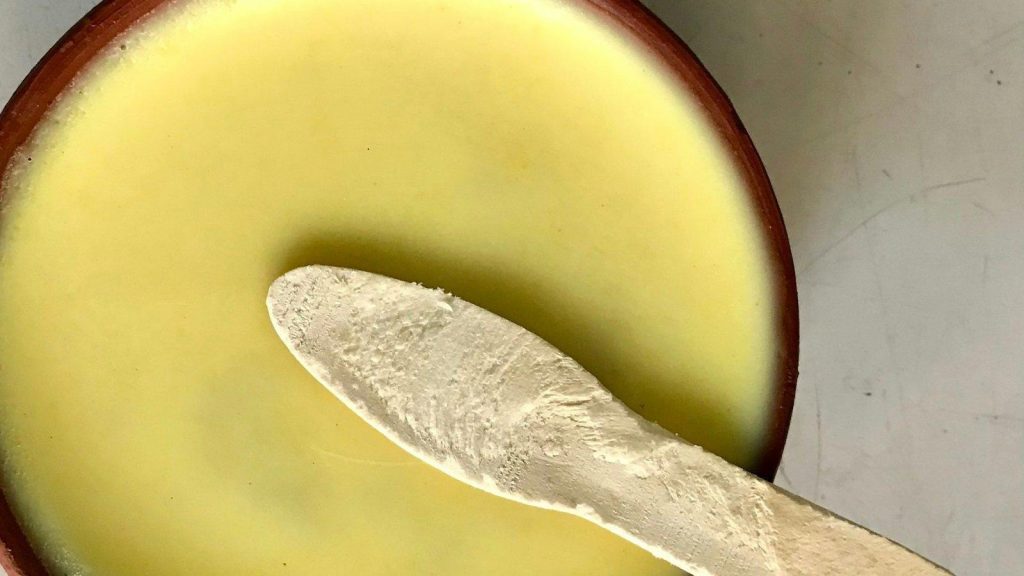
What Acrom sells is exactly that: a jar of 100% raw unrefined Nilotica with nothing else added. No emulsifiers, no fragrance, no fillers. The texture gives it away the first time you open the lid. Authentic Nilotica is soft enough to scoop with a fingertip at room temperature, has a pale ivory color, and carries a faint nutty scent that smells like the trees it came from. Customers who have ordered from Acrom describe recognizing it immediately.
The clearest outside confirmation came from the r/Blackskincare thread that asked, “is my Acrom shea butter legit?” Longtime shea sellers and women who have been using Nilotica for years chimed in. The consensus was clear: this is the real thing. In a market where counterfeits and West African relabels are common, that kind of community confirmation is rare.
How does Acrom compare to West African shea butter?
Anyone who has used West African shea before knows the routine. You scoop a hard, grainy chunk out of the jar, warm it between your palms until it melts, and rub it in slowly. It does the job, but it takes effort. The Nilotica skips that step entirely.
Straight from the jar, it’s soft enough to scoop with a fingertip. It melts on contact with skin and sinks in within seconds, leaving no waxy film, no shine, no need to wait before getting dressed. The higher oleic acid content is what does it. Nilotica’s fatty acid profile is closer to your skin’s own sebum, so it absorbs the way the skin was already designed to absorb its own oils.
Acrom does cost more than West African shea. Customers who have used both consistently say the Nilotica disappears into the skin in a way West African shea never quite does, and that once they made the switch, they stopped reaching for the West African jars they used to keep around. The price stops feeling like a question after the first week of use.
Does Acrom’s Nilotica really work for dry, ashy skin?
Yes, and the customer reports on this are remarkably consistent. The same story comes up over and over. Dry patches that wouldn’t respond to any commercial moisturizer (elbows that stayed ashy through full bottles of Aquaphor, heels that cracked despite nightly cocoa butter, hands that felt like sandpaper no matter how much hand cream went into them) start softening within two to three weeks of daily Nilotica application. Some people see results faster than that.
For eczema, the answer is also encouraging, with one important caveat. Acrom doesn’t claim to treat eczema and shouldn’t be expected to. It’s a skincare product, not a medication. People who use it for eczema-prone skin do so alongside their existing prescription routine, and what they report is that the Nilotica seems to extend the calm between flares. Skin stays softer for longer, dry patches don’t escalate as fast, and the prescription regimen they were already on seems to work better with the Nilotica supporting it.
The reason it works is straightforward. Nilotica is loaded with unsaturated fats that the skin barrier uses to repair itself, and dry-skin and eczema-prone presentations both come down to a compromised barrier. Give the barrier what it needs in concentrated form, and it rebuilds.
What skin types does Acrom work best for?
Acrom has a broad customer base, with the heaviest concentration among people with dry to very dry skin. The reviews are full of women dealing with chronic ashy skin, eczema-prone patches, the rougher texture that comes with perimenopause and menopause, and skin that’s been compromised by years of retinoids and acids. Customers in cold or dry climates rely on it through winter because nothing else holds up the same way. Combination and oily skin types use it as a targeted treatment on dry zones rather than a full-face moisturizer, and reviewers consistently note that the Nilotica is significantly less comedogenic than coconut oil or denser West African shea, which makes it forgiving even on the face.
Hair is another popular use, especially among customers with 4A through 4C hair textures. Acrom works as both a sealant and a styling cream because Nilotica’s softer profile coats the strand without weighing it down. Most people who have tried using shea butter on their hair have dealt with the buildup that comes with heavier West African versions. With Nilotica, the buildup never happens. Reviewers describe using a small amount on the ends to seal in moisture between wash days, and some apply it to the scalp to soothe dryness or itchiness.
How long does a jar of Acrom Nilotica last?
Longer than most people expect, which is one of the most pleasant surprises customers mention. Nilotica is dense and concentrated, so a small amount goes a long way. A pea-sized scoop covers a full arm or leg. A drop the size of a half-pea is enough for the face. For someone using it once a day on a specific area like cracked heels or chronic elbow dryness, a jar lasts two to three months. For someone using it on multiple body areas every day, it still tends to last around six to eight weeks.
The absorption is what makes the difference. The Nilotica sinks into the skin within seconds and locks in moisture for hours, which means most people only apply it once or twice a day. Commercial body lotions often need to be reapplied every few hours just to maintain the same softness, and over a month that adds up to a meaningful amount of extra product used. With Acrom, you apply once and forget about it until the next day.
Is Acrom’s Nilotica shea butter worth the $35 price tag?
For most customers, yes. The price looks high at first, especially compared to a tub of unrefined West African shea that costs a fraction of the same. But the customers who buy a second jar (and most do) say the per-use cost ends up being lower than they expected once they realize how little of the product is needed per application. A jar of Acrom Nilotica costs $34.99. At once-daily use on a targeted area, it lasts two to three months. That works out to under $0.50 per day, which is less than what most people end up spending on commercial moisturizers once you factor in how much more of those products gets used to achieve the same coverage.
The other side of the value is what you’re actually paying for. Acrom is a single-ingredient product without additives, fillers, or fragrance. The full price tag goes toward the quality of the one ingredient in the jar. That’s a different proposition than most skincare at this price point, where part of what you’re paying for is the brand name and the formulation. Customers who have done the comparison consistently say they’re getting more product per dollar than from a comparably priced moisturizer at a department store.
Is Acrom’s 60-day money-back guarantee actually honored?
Yes, and it’s one of the most generous terms in the category. Most skincare brands cap their refund window at 30 days, which is rarely enough time to actually see whether a product works on your skin. Acrom gives buyers 60 days, which is enough time to use the product daily through a full skin cycle and know whether it’s making a real difference.
For first-time buyers, this changes the decision. Spending $35 on a single-ingredient product from a brand you found through a Reddit thread can sound risky on paper. With a 60-day guarantee, it isn’t. If the product doesn’t work for your skin within the first month, you have plenty of time to return it.
The longer guarantee window also reflects how confident the brand is in the product. Acrom is selling raw shea butter without marketing-driven add-ons. Either the Nilotica works for someone’s skin or it doesn’t, and most people can tell within a week or two. Offering 60 days when 30 is the industry norm is a quiet statement of confidence.
Bottom line
Acrom’s Pure Nilotica shea butter is worth ordering if you have dry, ashy, sensitive, or barrier-compromised skin and you’ve been let down by everything else you’ve tried. That’s the customer base that comes back jar after jar. The Nilotica fills a gap that most commercial skincare doesn’t reach, and once people find it, they tend to stay with it.
What makes Acrom different from bigger skincare brands is that the price is pointed at the ingredient rather than the marketing. There’s nothing in the jar except the Nilotica, which is rare at this price point. The 60-day window gives buyers enough time to know whether the product works for them, and the loyalty of the community that has made Acrom part of its routine is the strongest indication that for the right person, this is exactly the product it claims to be.